

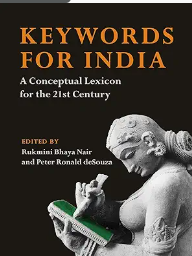
Lecture Four of Keywods & Cultures focuses on Nair & deSouza’s 2020 challenge to Keywords. In Keywords for India, these scholars provide an amazingly rich range of multilingual and multicultural Indias as those IndiaS are seen through the windows of spiritual keywords such as Dharma & Mana and political concepts such as Policy Paralysis & Jobless Growth, as well as sociolinguistic keywords related to Beauty, Beauty Parlours & Gyms. A range of experts explain their IndiaS through the keywords of culture that show something essential about Gender and Foeticide, ambitions and aspirations of Individual Indians, and the way Indian Netizens exist on the streets and online as Netizens.
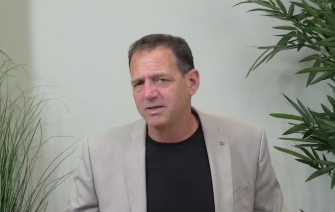
James W. Underhill, author of Ethnolinguistics & Cultural Concepts: truth, love, hate and war (Cambridge UP 2012) and coauthor with Mariarosaria Gianninoto of Migrating Meanings: Sharing Keywords in a Gloabl World (Edinburgh UP 2019)
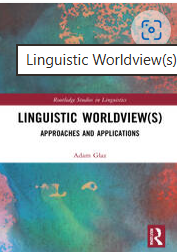
Professor Adam Glaz discusses Viewpoint, distance and Vantage Theory in Cognitive Linguistics and the Revelvance of Models for constructing meaning.
Adam Glaz is Professor at Maria Slodovska University, Lublin, a close collaborator with Jerzy
Bartminski and the Lublin School and the author of books on worldview in language. He is regularly invited as Key Note Speaker to International Events in Belfast, Madrid and Rouen, where he is a close collaborator with the Rouen Ethnolinguistics Project. Besides teaching and translating, he has organized International Conferences in Lublin and has translated key works by Anna Wierzbicka into Polish, and Jerzy Bartminski into English.
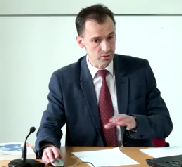
Professor Rabasso, a polyglot specialist of Spanish and International Management, professional musician, and key contributor to the Eriac Research Group, discusses Sealand Identies with relation to the Catalan sense of Homeland at the Heimat & Homelands Conference in Rouen 2015. Rabasso’s paper had a profound influence on the Rouen Ethnolinguisics Project and ultimately led the way to forming the Highlands, Islands & Homelands project that links Scotland, Spain, Normandy and Croatia in a joint partnership exploring homelands, their centres and their fringes.
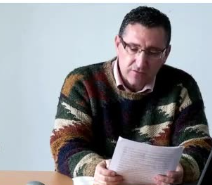
Jose Vicente Lozano has worked as Dean and Research Group Director of the Linguistics Section of the Eriac Research Group at Rouen Univeristy in Normandy, France. His paper on Homelands in Spanish considers the diminutive forms of Homelands and the way they are percieved by Spanish-speakers. Jose Vicente Lozano currently works as Co-Director of the Rouen Ethnolinguistics Project, which he helped launch in 2014.
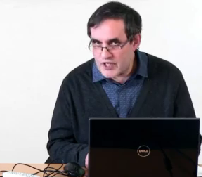
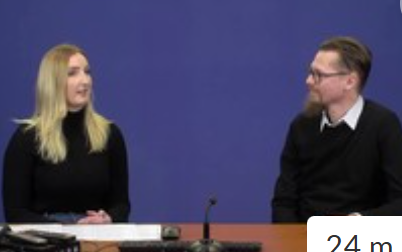
Carsten Levinsen in Interview with the Rouen Ethnolinguistics Project dicsusses his Research on the Danish Language, Natural Semantics Metalanguage approach he learned with Goddard and Wierzbicka in the 2000s in Australia.
Carsten Levisen is a specialist of humour studies and postcolonial semantics in a multipolar world.
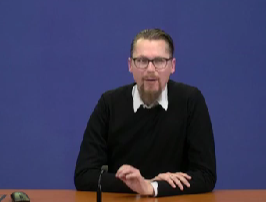
How do we think and feel in Danish? What makes the Danish worldview and the senibility of the Danish linguistic community specific, united, unique? Carsten Levisen gives the following answer to these questions for the Rouen Ethnolinguistics Project, in the days before Covid closed down airports and institutions in 2019 in his lecture on Danish Folk Aesthetics.
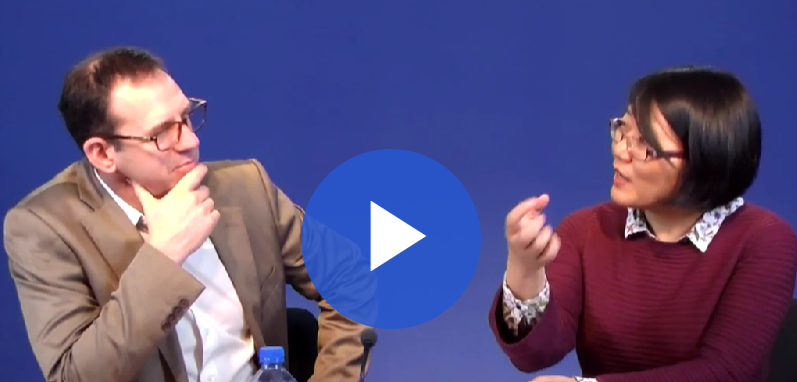
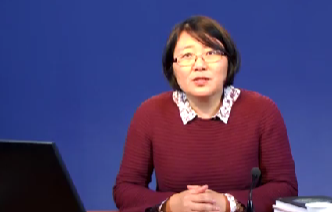
Professor Zhengdao Ye, who works closely with Anna Wierzbicka and the Natural Semantics Metalanguage network at Australian National University in Canberra, discusses her book on The Semantics of Nouns, published by Oxford University Press in 2017.
Professor Ye explains how Natural Smantics Metalanguage is used to explain Meaning, Communication and Culture.
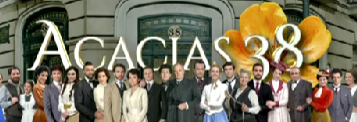
How do we laugh in language? In other languages? How do the Spanish look back and laugh? How do Spanish series present the past?
César Ruiz Pisano, Professor at the University of Paris, considers how the 19th century is represented in a famous TV Series.
César Ruis Pisano worked closely with the Rouen Ethnolinguistics Project and continues to collaborate with projects related to languge, culture, translation, Highlands, Islands and Homelands.
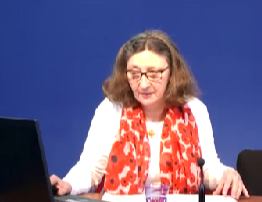
When we translate historical works, how do we engage in translating out of time? How do we handle the worldviews of people who live in other places in other times? Cecile Fouache discusses the main questions that arise when we translate texts about the Gulf, its history and its geopolitical significance. Cecile Fouache was one of the great Directors of the English Department of Rouen and she travels widely through languages and worldviews as a teacher, a translator, a Post-Editor, and as an inspiration to her students of Canadian Literature.
Anna Wierzbicka explains why she founded the Natural Semantics Metalanguage and how it works to Maria Zijlstra on ABC Radio in Australia